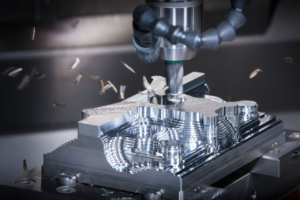
Plastic Injection Mold Design Guide (DFM Guide)
Plastic Injection Mold Design Guide: DFM Principles for High-Quality Plastic Parts
Plastic injection molding is one of the most widely used manufacturing processes for producing complex plastic components with high precision and efficiency. However, the quality and cost of the final product depend heavily on plastic injection mold design.
Design for Manufacturing (DFM) is a crucial engineering method used to optimize part design before mold production begins. A well-executed DFM analysis can reduce production defects, shorten development time, and lower manufacturing costs.
This guide explains the most important DFM rules for plastic injection mold design.
Structure of a Plastic Injection Mold
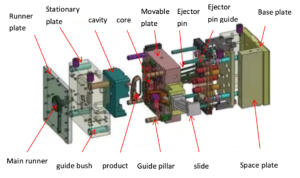
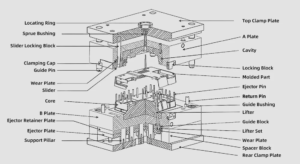
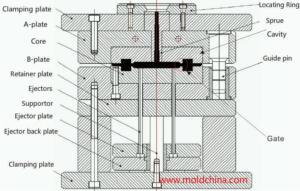
A typical injection mold consists of two main halves:
-
Fixed Mold (Cavity Side)
-
Moving Mold (Core Side)
These two halves close together during injection to form the cavity where molten plastic flows and solidifies. Major mold components include:
-
Runner system
-
Sprue bush
-
Guide pins
-
Ejector system
-
Cooling channels
When the mold opens, the ejector pins push the finished plastic part out of the mold. Proper mold structure ensures accurate part dimensions and stable production.
Key DFM Rules for Injection Mold Design
1. Uniform Wall Thickness
One of the most important design rules is maintaining consistent wall thickness.
Benefits include:
-
Prevents sink marks
-
Reduces warpage
-
Improves cooling efficiency
-
Ensures uniform material flow
Typical wall thickness recommendations:
| Material | Recommended Thickness |
|---|---|
| ABS | 1.2 – 3.5 mm |
| PP | 0.8 – 3.8 mm |
| PC | 1.0 – 4.0 mm |
| Nylon (PA) | 0.8 – 3.0 mm |
2. Draft Angle Design
Draft angles allow molded parts to be easily released from the mold.
Typical draft angle recommendations:
-
Minimum: 1°
-
Ideal: 2°–3°
-
Textured surfaces: 3°–5°
Without proper draft angles, parts may stick to the mold, causing surface damage.
3. Proper Rib Design
Ribs are used to strengthen plastic parts without increasing wall thickness.
Recommended rib design rules:
-
Rib thickness: 50–60% of wall thickness
-
Rib height: ≤ 3 × wall thickness
-
Include draft angles
Proper rib design improves mechanical strength while minimizing sink marks.
4. Gate Design and Placement
The gate controls how molten plastic enters the mold cavity.
Common gate types include:
-
Edge gate
-
Pin gate
-
Submarine gate
-
Hot runner gate
Gate location must ensure balanced filling and proper pressure distribution to avoid defects.
5. Cooling System Design
Cooling accounts for the largest portion of the injection molding cycle time.
Efficient cooling systems help:
-
Reduce cycle time
-
Improve dimensional stability
-
Prevent warpage
Cooling channels must be evenly distributed across the mold.
Common Injection Molding Defects
| Defect | Cause | Solution |
|---|---|---|
| Sink marks | Thick sections | Reduce wall thickness |
| Warpage | Uneven cooling | Optimize cooling system |
| Short shot | Poor flow | Adjust gate location |
| Flash | Mold mismatch | Improve mold precision |
Proper DFM analysis can eliminate most of these issues before mold production begins.
Why DFM Is Essential Before Mold Manufacturing
A professional DFM report helps manufacturers:
-
Reduce mold modification costs
-
Improve product quality
-
Shorten development cycles
-
Increase production efficiency
For companies developing new plastic products, DFM is an essential step before starting mold manufacturing.
Conclusion
Plastic injection mold design directly affects the success of plastic product manufacturing. By applying DFM principles such as uniform wall thickness, proper draft angles, optimized gate placement, and efficient cooling systems, manufacturers can ensure high-quality parts and stable production.
Working with an experienced injection mold manufacturer can significantly improve product performance and reduce overall manufacturing costs.