The Ultimate Guide to Plastic Injection Molding
What Is Plastic Injection Molding? (Complete Guide for Manufacturers)
Plastic injection molding is one of the most widely used manufacturing processes for producing plastic parts at scale. It allows manufacturers to create highly precise components with excellent repeatability and efficiency.
Industries such as automotive, electronics, medical devices, packaging, and consumer products rely heavily on injection molding for mass production.
In this guide, we will explore how plastic injection molding works, its advantages, materials, costs, and how to choose the right manufacturing partner.
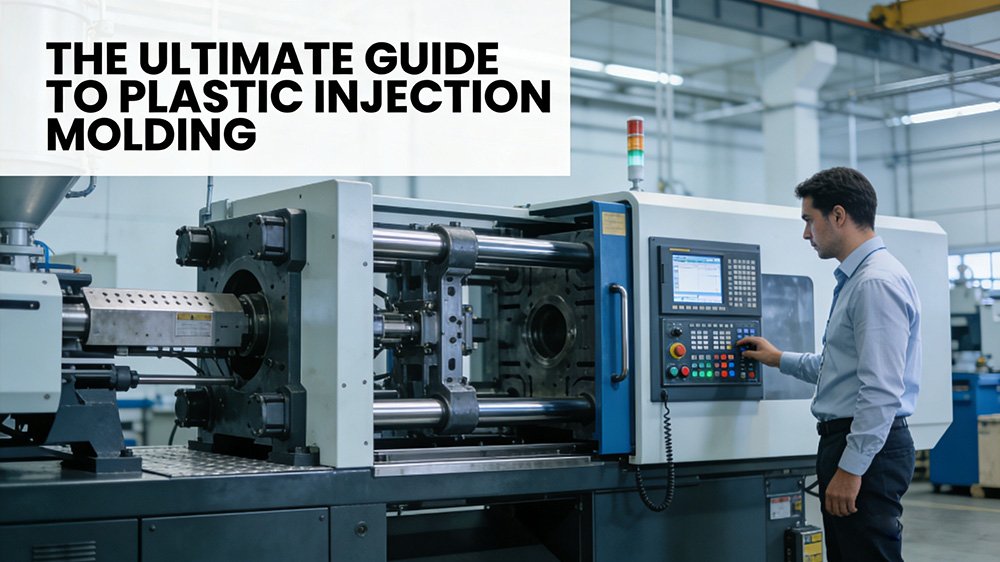
Injection Molding Machine and Process
The injection molding process begins with plastic pellets, which are fed into a heated barrel where they are melted. The molten plastic is then injected into a mold cavity under high pressure.
Once the plastic cools and solidifies, the mold opens and the finished product is ejected.
Main Steps in Injection Molding
The injection molding process typically includes five stages:
1. Plastic Melting
Plastic pellets are heated inside the barrel until they reach a molten state.
2. Injection
The molten plastic is injected into the mold cavity at high pressure.
3. Packing
Additional pressure is applied to ensure the mold is completely filled.
4. Cooling
The plastic cools and solidifies inside the mold.
5. Ejection
The mold opens and ejector pins push the finished part out.
Advantages of Injection Molding
Injection molding offers several important benefits:
High Production Efficiency
Injection molding can produce thousands or even millions of parts with consistent quality.
High Precision
Modern molds allow tolerances as tight as ±0.01 mm.
Complex Geometry
The process can produce complex shapes that would be difficult to manufacture with other methods.
Low Cost in Mass Production
Although mold costs are high initially, the cost per part becomes very low at high volumes.
Common Materials Used in Injection Molding
Different plastic materials provide different mechanical properties.
| Material | Characteristics |
|---|---|
| ABS | High impact resistance |
| PP | Lightweight and chemical resistant |
| PC | High transparency and strength |
| Nylon | High wear resistance |
| PET | Food-grade packaging |
Material selection depends on product requirements such as strength, flexibility, and temperature resistance.
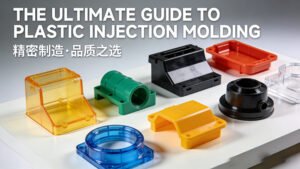
Industries That Use Injection Molding
Injection molding is widely used across many industries:
-
Automotive components
-
Consumer electronics
-
Medical devices
-
Household products
-
Packaging industry
From simple plastic clips to complex medical parts, injection molding supports a wide range of manufacturing needs.
Choosing the Right Injection Molding Manufacturer
Selecting the right manufacturer is essential for product success.
Consider the following factors:
-
Engineering capability
-
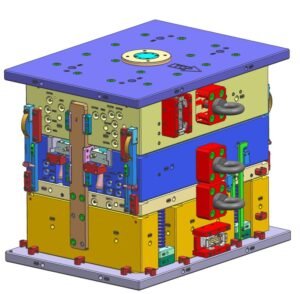
Mold design expertise
-
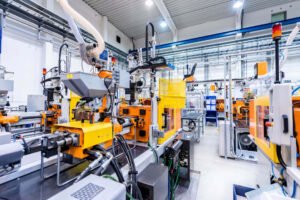
Manufacturing equipment
-
Quality control systems
-
Industry experience
A professional supplier can provide DFM analysis, mold design, mold manufacturing, and injection production.
Conclusion
Plastic injection molding is a versatile and efficient manufacturing technology that enables the production of high-quality plastic parts at scale.
By choosing the right materials, optimizing mold design, and working with an experienced manufacturer, companies can achieve excellent product performance and cost efficiency.